
Brooks Law Firm
You missed a court date — or someone told you there is a “capias” out for you — and now you are afraid to drive, afraid to go to work, afraid to look it up. Take a breath. A capias is a problem with a known solution, and in many cases it can be fixed faster than you fear, sometimes without a night in jail. What it cannot survive is being ignored. Brooks Law Firm resolves capias and bench warrant situations in Shelby County. Call (901) 324-5000, or call or text the criminal line at 901-412-2973.
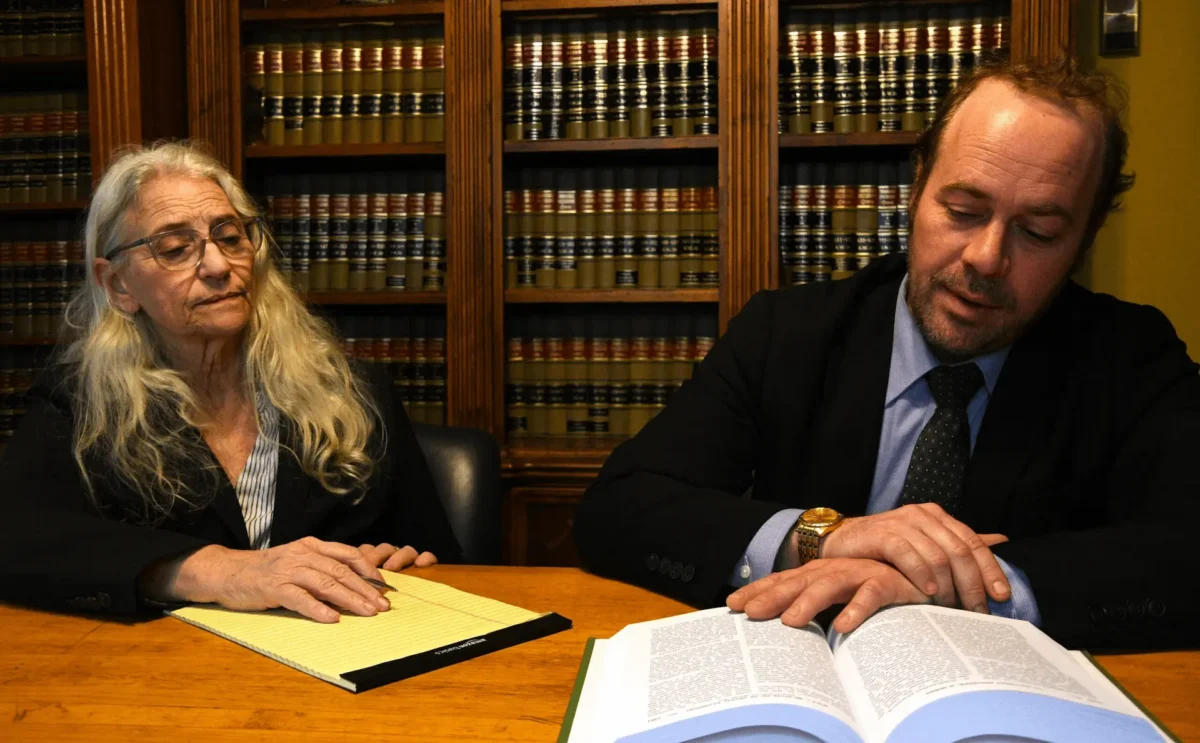
What a Capias or Bench Warrant Actually Is
In Shelby County practice the two terms are used almost interchangeably, and they mean the same thing where it counts: a judge has ordered that you be taken into custody. It comes from the bench — from the court itself — most often because a scheduled court date was missed. That makes it different from an arrest warrant, which is issued on probable cause for a new criminal charge. If you are not sure which kind you are dealing with, our warrants page explains the full landscape; this page is the deep dive on the missed-court-date scenario.
How People End Up With One
- A missed court date. The most common cause — and often not from carelessness. Cases get reset, dates move, notices go to old addresses, someone writes down the wrong division. The court does not track you down to remind you.
- A missed payment or compliance date. Cost dockets, review settings, and proof-of-completion dates count as court dates. Missing one can generate a capias just like missing a hearing.
- A missed preliminary hearing or trial setting. The more important the setting, the more seriously the court treats the absence.
- An alleged probation violation. That is technically its own kind of warrant with its own process — see our probation violation page.
What It Means While It’s Active
An active capias does not expire, and it does not sit quietly. It is entered into the systems officers check at every traffic stop, and it surfaces in background checks. Any encounter with law enforcement — a taillight, a checkpoint, an unrelated call — can end with you in custody at the worst possible moment, in front of your kids or your employer. Beyond the arrest risk, a missed appearance puts your bond at risk of forfeiture, and failing to appear can be charged as its own separate offense under Tenn. Code Ann. § 39-16-609, on top of the original case.
How a Capias Gets Fixed
This is the part most people do not know: a capias can often be recalled. Your lawyer can move to set the capias aside and put the case back on the docket — a new court date, an explanation to the judge, the case moving again. When that works, the warrant is lifted without you ever being booked. Judges see missed dates every single day; what they respond to is someone who shows up quickly, through counsel, ready to fix it.
When a recall is not available — it depends on the charge, the history, and the judge — the next best path is a planned, voluntary surrender: bond posture confirmed in advance, timing chosen to minimize hours in custody, and the underlying case addressed at the same time. What we work to avoid is the third path, the one that happens by default: an unplanned arrest at a traffic stop on a Friday night.
What Not to Do
- Don’t wait for it to go away. It won’t. Capiases only get older, and older looks worse.
- Don’t walk into 201 Poplar alone to “check on it.” You can be taken into custody on the spot, with no plan and no bond strategy. Go with counsel and a plan instead.
- Don’t assume the reason you missed court doesn’t matter. It does. Illness, a bad address, a reset you were never told about — bring the proof. It shapes how the judge sees the whole situation.
If You’ve Already Been Arrested on the Capias
The job changes but the urgency doesn’t: getting bond addressed, getting the case back on track, and dealing with any failure-to-appear allegation on its own merits. The first appearance after a capias arrest is where much of that gets decided, so having a lawyer involved before that setting matters.
Capias & Bench Warrant FAQ
Will I definitely go to jail?
No — not definitely. In many cases a capias can be recalled and the case reset without an arrest. Where surrender is required, planning it in advance usually means hours in custody instead of days. The outcome depends on the charge, the history, and how quickly it is addressed.
Can a capias be lifted without me being arrested?
Often, yes. A motion to recall the capias and reset the case is frequently the fastest fix, especially when it is filed promptly and the missed date has an explanation.
Does a capias or bench warrant expire?
No. It stays active until it is recalled, served, or otherwise resolved by the court — whether that takes a week or a decade.
I never got notice of the court date. Does that help me?
Yes, it is genuinely relevant — courts distinguish between people who ignored a date and people who never knew about it. Gather what you have (old addresses, reset paperwork, anything in writing) and act now; the explanation works best when it arrives early.
What does it cost to fix?
The consultation is free, and we quote a flat fee up front so you know the full cost before deciding anything. Our page on what a criminal defense lawyer costs in Memphis explains how fees work.
This page is part of our Shelby County court process series: what happens after an arrest, arraignment in General Sessions, the preliminary hearing, how long a criminal case takes, and how bond works.

Fix It On Your Terms
The best time to deal with a capias was the day it was issued. The second-best time is today. Brooks Law Firm offers a free initial consultation — call (901) 324-5000, or call or text the criminal line at 901-412-2973. Se habla Español.
This page provides general information about Tennessee criminal procedure current as of 2026 and is not legal advice. Court practices, statutes, and case law change, and how the process applies depends on the specific facts of each case. Reading this page does not create an attorney-client relationship; such a relationship is formed only by a written engagement agreement signed by both the client and the firm.