
Drug Charges
Drug Testing Methodology and Its Challenges in Tennessee

Drug test results carry enormous weight in the criminal justice system. A positive test can drive a new criminal charge, trigger a probation violation, or jeopardize someone’s standing in a treatment or recovery court. Yet drug testing is far less precise than it is often presented to be. The type of test, what it actually measures, how the sample was collected and handled, and how the result is interpreted all create room for error—and for challenge. This page explains how drug testing works in Tennessee, the scientific and legal problems that recur, and how those issues play out in a pending case, a probation violation, and a treatment-court setting.
This page is informational and is not a substitute for advice about a specific case. The law and the science in this area—particularly regarding hemp-derived cannabinoids—are changing quickly.
Types of Drug Tests and What They Actually Measure
Not all drug tests are equal, and a great deal turns on which one was used.
- Immunoassay screening tests. The fast, inexpensive tests used for most initial and field screening (including many urine “cup” tests). They detect classes of substances by antibody reaction. They are screening tools, not confirmatory tools, and they are prone to cross-reactivity and false positives. A positive screen should be confirmed by a more specific method before it is treated as reliable.
- Confirmatory testing (GC-MS and LC-MS/MS). Gas or liquid chromatography combined with mass spectrometry is the recognized gold standard. It identifies specific compounds and is far more reliable—but it is more expensive and is not always performed, especially in probation and treatment-court screening.
- Sample types. Urine, blood, oral fluid (saliva), and hair each have different detection windows and limitations. Urine detects past use, sometimes for weeks, but does not measure current impairment. Blood is more current but more invasive. Hair has a long window but raises questions about environmental contamination and bias. Which matrix was used shapes what the result can and cannot prove.
A recurring theme runs through all of these: a test that shows past exposure to a substance is not the same as proof of current impairment, and a screening result is not the same as a confirmed one.
What Drugs Are Tested For
Drug panels vary by purpose. A basic employment-style panel is narrow; the panels used in criminal justice, probation, and treatment-court settings are often broader and may be expanded to target specific substances. Commonly included are:
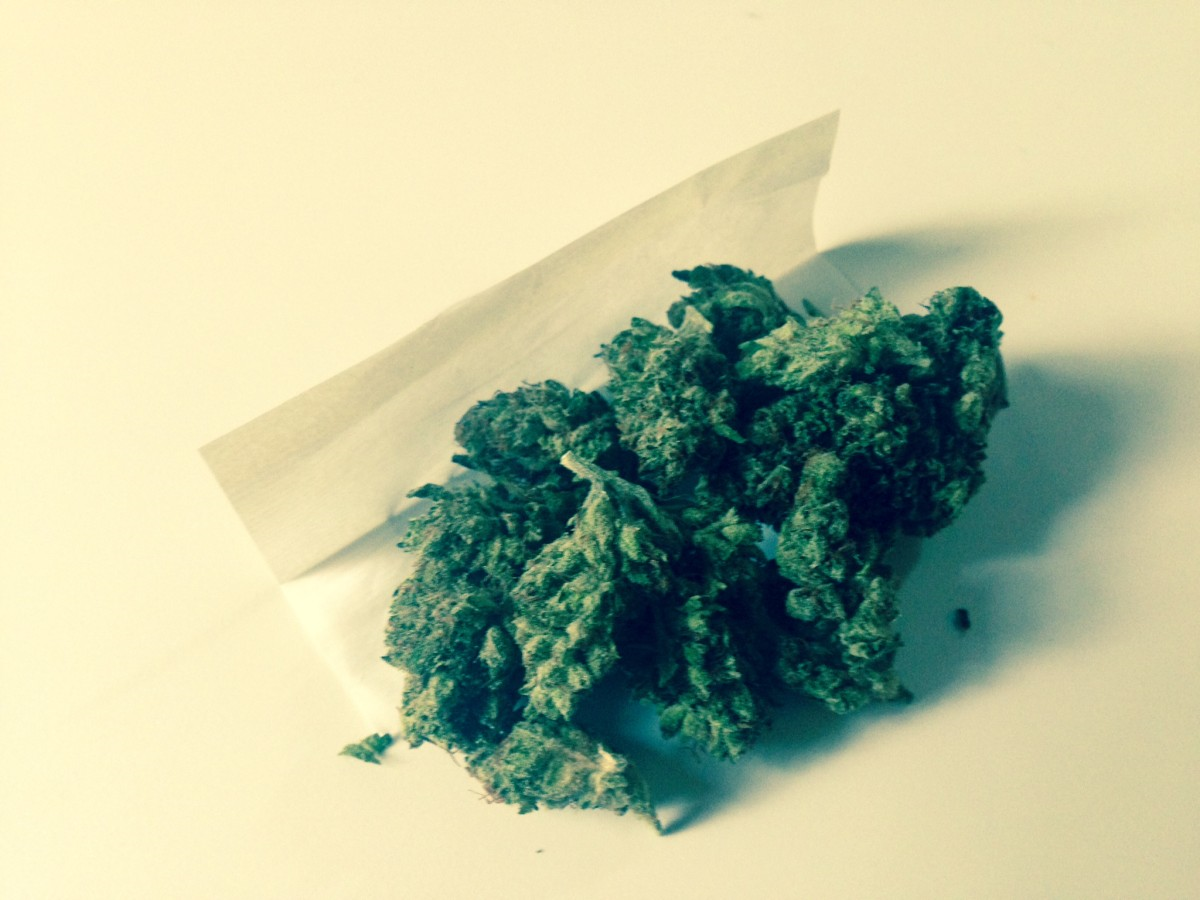
- Cannabinoids (THC). The most frequently flagged, and—for the hemp reasons discussed below—the most problematic.
- Cocaine (typically detected via its metabolite, benzoylecgonine).
- Opiates and opioids. Natural and semi-synthetic opiates (such as morphine and codeine) and, on expanded panels, synthetic opioids; fentanyl often requires a dedicated test rather than appearing on a basic panel.
- Amphetamines and methamphetamine. A category especially associated with false positives from legal medications.
- Phencyclidine (PCP).
- Benzodiazepines, barbiturates, and methadone. Common on expanded panels.
- Alcohol (including markers such as EtG/EtS in some abstinence-monitoring contexts, which are highly sensitive and can flag incidental exposure).
The breadth of the panel matters. A wider panel or a lower detection threshold increases the chance of a positive result—including from lawful medications, incidental exposure, or cross-reacting compounds—which is one reason the specific panel and its cutoff levels are always worth scrutinizing.
The Hemp Problem: Legal THC Derivatives vs. Illegal Marijuana
This is one of the most significant—and most current—issues in Tennessee drug testing. Tennessee follows the federal framework defining hemp as cannabis containing no more than 0.3% delta-9 THC by dry weight; cannabis above that threshold is illegal marijuana. At the same time, a range of hemp-derived cannabinoids—such as delta-8 THC, delta-10, and others—have been sold lawfully in Tennessee, subject to evolving licensing, labeling, and age rules that the legislature tightened significantly in changes taking effect around 2026.
The core forensic problem is straightforward: a standard drug test generally cannot distinguish a legal hemp-derived cannabinoid from illegal marijuana. An immunoassay screen reacts to cannabinoids as a class, and delta-8 and similar compounds will typically register the same as delta-9 THC. A person who lawfully used a hemp-derived product can therefore “fail” a THC test exactly as if they had used illegal marijuana. Even more specific testing faces difficulty separating lawful from unlawful sources, and questions about THCA (which can convert to delta-9 THC when heated) add further complexity. For the defense, this gap creates a powerful argument: a positive cannabinoid result, standing alone, does not prove the use of an illegal substance.
Tennessee’s testing protocols and the legal status of specific cannabinoids continue to change, so the analysis in any given case depends on the law in effect at the relevant time and the specific test performed.
Active vs. Inactive Cannabinoids and DUI Cases
Cannabis DUI cases turn on a scientific distinction that is often blurred in the courtroom. When THC enters the body it is metabolized into two principal compounds: 11-hydroxy-THC, which is psychoactive, and 11-carboxy-THC (carboxy-THC), which is inactive. Carboxy-THC does not cause impairment, yet it is fat-soluble and can linger in the body for days or weeks after any impairing effect has worn off—particularly in frequent users. A test that detects carboxy-THC therefore shows past use, not current impairment.
This matters because, unlike the 0.08 BAC standard for alcohol, the scientific consensus is that there is no blood-THC concentration that reliably predicts impairment. Major research, including work by the AAA Foundation for Traffic Safety, has concluded that no per se THC threshold accurately separates impaired from unimpaired drivers—a set level both misses genuinely impaired drivers who test low and sweeps in sober people (including medical users and those exposed earlier) who test above it. Studies have documented active THC still present days after use in heavy users with no measurable impairment.
The practical consequences for a Tennessee cannabis DUI defense:
- The presence of THC or its metabolites is not, by itself, proof of impairment at the time of driving.
- The State generally must prove actual impairment, not merely a positive test, and the gap between “detected” and “impaired” is central to the defense.
- Whether a test measured active THC or only the inactive carboxy metabolite is a critical question—and one the defense should always press.
- The timing of the blood draw relative to the stop, and the pharmacokinetics of THC, can be used to challenge any inference of contemporaneous impairment.
For more on how the underlying stop, blood draw, and warrant are challenged, see our DUI Defense and Electronic Surveillance Defense pages.
False Positives and Reliability Problems
False positives are a real and documented phenomenon, especially with immunoassay screening tests. Common sources include:
- Cross-reactivity with legal substances. Various prescription and over-the-counter medications have been reported to trigger positive screens for amphetamines, opiates, and other classes. Certain decongestants, antidepressants, and other common drugs are recurring culprits.
- Foods and incidental exposure. Poppy seeds and other dietary sources have historically produced opiate positives; highly sensitive alcohol markers can flag incidental, non-beverage exposure.
- Legally prescribed medication. A positive result may simply reflect a valid prescription, which makes documentation and context essential.
- Screening without confirmation. When a positive immunoassay screen is acted upon without GC-MS or LC-MS/MS confirmation, an unreliable result can drive serious consequences.
- Cutoff and threshold sensitivity. Lower cutoffs catch more—including trace or incidental amounts that do not reflect meaningful use.
The defense response is to demand confirmatory testing, the full laboratory documentation, the specific cutoff levels used, and the person’s medication and dietary history—and to retain an independent expert where warranted.

Chain of Custody
For a drug test to mean anything, the State must be able to show that the sample tested actually came from the person, and that it was not contaminated, switched, mislabeled, or altered between collection and analysis. That is the chain of custody. Breaks or gaps in it can undermine—or exclude—the result. Key points of inquiry include:
- How the sample was collected, labeled, and sealed, and by whom.
- Each person who handled the sample and each transfer, with corresponding documentation.
- Storage conditions and the possibility of degradation or contamination.
- Whether collection protocols (including observation and tamper controls) were followed.
- Laboratory accreditation, analyst qualifications, instrument calibration, and quality-control records.
A documented chain-of-custody failure is one of the most effective ways to challenge a test result, because it goes to whether the result can be trusted at all.
What Counts as a “Violation” Level Under Tennessee Law
People often ask what concentration of a drug counts as a violation. The answer is frequently misunderstood, and the distinction matters a great deal.
There is generally no per se “nanogram” threshold for drugs the way there is for alcohol. For alcohol, Tennessee law sets a defined per se limit—0.08% BAC—above which impairment is presumed for DUI. For other drugs, Tennessee has not adopted equivalent per se concentration limits. In the DUI context, that is why the State generally must prove actual impairment rather than simply pointing to a number (as discussed in the cannabinoid section above). In the probation and treatment-court context, a “violation” typically does not turn on a defendant’s measured blood concentration at all.
What the “level” usually refers to is the laboratory’s cutoff. Drug tests are calibrated to administrative cutoff concentrations—a result at or above the cutoff is reported “positive,” and below it “negative.” These cutoffs are set by the testing program and laboratory (often tracking federal SAMHSA workplace cutoffs or a program’s own standards), not by a Tennessee statute defining a criminal threshold. Two consequences follow:
- Screening and confirmation cutoffs differ. An initial immunoassay screen uses one cutoff; confirmatory GC-MS or LC-MS/MS testing uses a different, more specific one. A result can screen positive but fail to confirm, which is why confirmation is essential before a result is treated as a true positive.
- For most probation and program purposes, the standard is presence, not concentration. The question is usually whether a prohibited substance was confirmed present above the cutoff—not how much. That makes the cutoff level, the confirmation step, and the reliability questions discussed elsewhere on this page the real battleground, rather than any statutory “violation number.”
Because the standard is presence-based, the defenses shift accordingly. Where there is no per se number to argue about, the focus turns to whether the substance was actually unlawful (the hemp distinction), whether a prescription or innocent exposure explains the result, whether the positive was ever confirmed, whether the cutoff was appropriate, and whether the chain of custody holds. A bare positive at an unstated or unconfirmed cutoff is far weaker than it may first appear.
Cutoff levels, testing standards, and the governing law change over time and vary by program and laboratory. The specifics in any case depend on the standards actually applied and should be confirmed against current authority.
Technical Violations and Graduated Sanctions
A failed drug test on probation is typically treated as a technical violation—a breach of a supervision condition that does not itself involve the commission of a new criminal offense. Tennessee’s sentencing and supervision reforms have changed how these are handled. Rather than automatic full revocation, technical violations are generally subject to a framework of graduated, often capped, responses, with full revocation reserved for repeated or more serious violations. The governing provisions, including Tennessee Code Annotated § 40-35-311, structure how a court may respond to a first technical violation versus a second or subsequent one.
This matters for anyone facing a positive test on supervision: a single technical violation generally should not result in serving the entire remaining sentence, and the graduated-response structure is itself a point of advocacy. Whether a particular alleged violation is “technical” or instead involves a new offense can significantly affect the exposure, and is worth careful attention.
One procedural feature deserves special note. Under § 40-35-311, a laboratory drug-test report may be admissible in a probation revocation proceeding even when the analyst who performed the test does not appear to testify, provided it is accompanied by a statutorily compliant affidavit. This makes the contents and adequacy of that affidavit—and the underlying reliability of the test it reports—an important focus for the defense, since the usual opportunity to cross-examine the analyst may not be present.
Constitutional Issues: The Amount and Type of Testing
How a sample is obtained, and how much testing is imposed, can raise constitutional questions under the Fourth Amendment and article I, section 7 of the Tennessee Constitution.
- Blood draws are searches. Compelled extraction of blood is a search, and absent a recognized exception generally requires a warrant. The validity of the stop, the basis for testing, and any warrant are all open to challenge. (See our Electronic Surveillance Defense page for warrant-sufficiency analysis.)
- Scope and reasonableness. The frequency and invasiveness of testing—particularly as a condition of release, probation, or program participation—can be challenged where it exceeds what is reasonable for the situation.
- Consent and its limits. Testing is often justified by conditions a person agreed to. Whether consent was valid, knowing, and within its stated scope is frequently contestable.
- Suppression. Where testing flowed from an unlawful stop, search, or seizure, the results—and what followed from them—may be subject to suppression.
The constitutional protections that apply are strongest in a new criminal prosecution and are reduced—though not eliminated—in the probation and treatment-court contexts discussed next.
Using Test Results in Different Settings
In a pending criminal case
In a new prosecution, the full protections apply: the State must prove its case beyond a reasonable doubt, the rules of evidence govern admissibility, and the defense can move to exclude unreliable or unlawfully obtained results. A test result must be authenticated, its reliability established, and—where it is offered to prove an illegal substance or impairment—it must actually support that conclusion. This is where the hemp distinction, the active-versus-inactive cannabinoid issue, false positives, and chain-of-custody challenges have the most force.
In a probation violation
A probation violation proceeding is different and, in important ways, harder. The burden of proof is lower—typically a preponderance of the evidence rather than beyond a reasonable doubt—and the rules of evidence are relaxed, so results that might be excluded at trial may be considered. That makes it even more important to attack the underlying reliability of the test: whether a positive screen was ever confirmed, whether the substance was actually unlawful (the hemp issue again), whether a prescription explains the result, and whether the chain of custody holds. A single questionable test should not be allowed to revoke someone’s liberty unchallenged.
In treatment and recovery courts
Treatment courts (drug courts, recovery courts, and similar programs) rely heavily on frequent testing, and a positive result can trigger sanctions up to termination from the program—which often carries a pre-negotiated sentence. These settings are less formal, the testing is often screening-only, and the consequences move quickly. Because so much rides on results that may never have been confirmed, the same reliability questions—confirmation testing, the hemp distinction, prescriptions, cutoffs, and chain of custody—are critical, alongside ensuring the person is treated fairly within the program’s own rules and given the process they are due.
How We Approach Drug Testing Evidence
Whether a test result appears in a new charge, a violation, or a treatment-court sanction, the approach is the same: identify exactly what test was used and what it measured, demand confirmation and the complete laboratory and chain-of-custody record, evaluate the hemp and active-cannabinoid issues where cannabis is involved, account for medications and other innocent explanations, scrutinize the constitutionality of how the sample was obtained, and bring in an independent expert when the science warrants it. A positive test is a starting point for inquiry, not the end of one.
Related Practice Areas
- Drug Offenses
- DUI Defense — cannabis DUI and the impairment-versus-detection problem.
- Drug Conspiracy Defense
- Probation Violation
- Electronic Surveillance Defense — challenging the stop, search, and warrant behind a blood draw.
- Criminal Defense Overview
Contact a Tennessee Criminal Defense Attorney Today
If a drug test is being used against you—in a new case, a probation violation, or a treatment court—the result may be far more vulnerable than it appears. Contact our office today to schedule a confidential consultation and learn how we can examine the testing and protect your rights.
This page is provided for general informational purposes only and does not constitute legal advice. Reading this information does not create an attorney-client relationship. The law and forensic science governing drug testing—especially regarding hemp-derived cannabinoids—are complex and change frequently, and their application depends on the facts of each case. You should consult a licensed attorney about your specific situation.